The Business of Comics for January 26th, 2026
AI Comics…Again. (ICV2) Comics-related AI tools are still being marketed at events like the Consumer Electronics Show, in spite of the pushback by creators, publishers, and consumers. This disconnect suggests that if AI-generated comics become a market, it may be separate from the human-generated comics market in the same way organic food is separate from McDonalds.
Anthropic Settlement Claim Site One AI infringement case has entered into the settlement phase, and creators who had their work scraped by the Anthropic systems may be eligible for a settlement payment of $3,000. I’m following this case closer than most because one of my novels was caught up in that system, and sadly, this settlement will be more than I made on the book sales so far.
Inky Pen Declares Bankruptcy (Bleeding Cool) Back in November, we talked about several digital comics platforms popping up to establish themselves in this distribution channel. I commented that it would be interesting to see how many of them would be able to sustain operations over the next two years. It appears that the first company of 2026 has already fallen, because InkyPen, the Steam-based comics platform, went bankrupt a couple of weeks ago, shortly after I mentioned them on the show. This reinforces the idea that the digital distribution space is always changing and publishers need to pay attention to both where their books go and if those apps are still around from one month to the next.
Classic Comics Enter into the Public Domain (Comics Beat). The copyright term has ended for classic IPs, including Betty Boop, Blondie, and Nancy Drew, which means the original versions of these characters are entering the public domain. While this means that there will inevitably be slasher horror movies of these characters in the spirit of Winnie the Pooh, independent creators need to remember that when an IP enters the public domain, that status only applies to the versions released in a particular year. It doesn’t apply to the entire history of the characters, and the IP might still have trademark protection. Before you decide to make your Betty Boop horror comic, check your script with an IP attorney to make sure you're not exposing yourself to a lawsuit.
Why Reliability is an Underrated Skill (Mike Gagon) Post reiterates a theme that has been persistent in comics since the comic strip era; good and on time will always be superior to great and late because the production cycle of comics is a continuous chain. A break in the production cycle undermines printing, shipping, and on-sale dates, which can reduce retailer confidence and consumer interest. If you’re going to be in freelance comics for any length of time, you have to commit to your deadlines.
How Creator-Owned Comics Are Luring Readers Away from Marvel and DC (Bleeding Fool). This final story is a commentary on an opinion piece that criticizes the current practices of crossovers, reboots, and retcons, and compares them to the more streamlined narratives of crowdfunded and independent comics. While the piece does express valid concerns about issues that have plagued single-issue superhero comics for decades, I still maintain that single-issue comics for vertically integrated companies like Disney and Warner Bros. serve more as R&D exercises than core profit centers.
When you look at the revenue streams for apparel, merchandise, film, television, games for superhero properties and compare it to the revenue potential for comics, it quickly becomes apparent that comics are the lowest source of revenue for these companies. For them, it is the difference between earning hundreds of thousands more dollars in comics and billions more dollars in games. In those other markets, variety sells, not continuity.
Independent comics are easier to get into, but they need to make themselves more attractive in the comic book market because they don’t have the established fan base, and they don’t have the revenue from other media markets. Independent comics may share shelf space with DC and Marvel, but they are not in the same business, so their business practices can’t be the same.
Have fun with your comics.
Gamal
PLEASE NOTE: THIS BLOG POST IS NOT A SUBSTITUTE FOR LEGAL ADVICE. IF YOU HAVE A CONTENT, LICENSING, OR INTELLECTUAL PROPERTY ISSUE, DISCUSS IT WITH YOUR LEGAL ADVISOR OR CONTACT C3 FOR A FREE CONSULTATION.
The Comics Business Starts 2026 with Seismic Shifts Across the Industry

The Business of Comics Podcast is back from vacation, where nothing happened except a major shift across the comic book industry. If you’d like to see the full podcast, you can find the link here.
Not So Good News
What Does Netflix Buying Warner Bros. Mean for DC Comics? (Comics Beat) “As long as movies, series, and animation based on DC Comics characters make money, DC Comics, the idea factory, will have a place doing something somewhere.”
If Netflix was a potential destination for comic book-related media (and that perception was questionable as the maybe movie model), the likelihood that they will be looking for comics related material after they own some of the biggest properties in the history of comics is unlikely.
The key for independents is to look to emerging forms of media exploitation and away from streamers like Netflix.
Diamond Moves to Chapter 7 Liquidation (Comics Beat) This may be the final nail in the coffin of Diamond, but another strange twist in the story wouldn’t be surprising after everything that happened in 2025.
Independents should have already pivoted away from Diamond and consider alternative distribution in 2026 and beyond.
Disney Closes a Licensing Deal with OpenAI (CNN) Disney might not consider an AI licensing deal a threat to creators, but Disney has never been a champion of creator-ownership, so this isn’t a shocking revelation.
It is a reminder that if you work for Marvel as a freelance creator, assume your work will become part of Open AI and don’t expect any compensation unless it is specifically stated in your agreement.
Page Rates Continue to Stagnate (Comics Beat) I broke down in earlier videos how making a living purely off of page rates alone isn’t financially viable. There are ways to generate additional money that didn’t exist twenty years ago, but they require more business hustle than creative skill.
Derivative Characters Fail to Generate Any Royalties (Comics Beat) One of my more popular videos from last year made the point that Marvel doesn’t need your original characters. This story reinforces that point. Marvel and DC don’t offer fame and fortune. You can get fame (comic book famous), and you’ll get the rate they offer you, but your fortune will have to come from somewhere else.
Good News
Webtoon Expands the Creator Programs (Financial Post) We’ll have to see what the new features of WT are and how they compare to the current deal, but in the wake of Diamond’s demise, it makes sense for independents to at least consider this distribution channel, if only as a marketing tool for their crowdfunding and print distribution.
Comic Industry Jobs Available in January (Popverse) As with any job you consider, both inside and outside of comics, pay attention to the IP clause in the potential employment agreement because some employers try to claim ownership of any IP that you develop while you’re working for the company, regardless if it is related to their business or if you do it on your own time.
Sony Buys Majority Stake in Charlie Brown Franchise (Comics Beat) This is a clear example of how a legacy IP like Charlie Brown can generate significant income long after the creator is dead.
As an independent, it helps to have a will or trust created and to consider including your IP and any ongoing royalties you get from your comics in your estate, even if it’s not making any money right now.
Younger Generations Embracing Comics (BBC) This suggests the analog trend being reported among Gen Z and Gen Alpha is impacting comics as well. This is good news if you want to get into print, but remember that print distribution has several challenges involved in it, especially when you consider the death of Diamond and the hoops you have to jump through to reach the younger demographics of readers.
Comics Industry Forecasts for 2026 (ICV2) I do agree there are going to be opportunities in tapping into social media influencer licensing, live selling on TikTok, print on demand for crowdfunding and niche titles, but each of these moves comes with their own legal and business risks, so independents are going to have to figure out what makes sense for their comics and what contract terms they can live with, all while making great comics.
PLEASE NOTE: THIS BLOG POST IS NOT A SUBSTITUTE FOR LEGAL ADVICE. IF YOU HAVE A CONTENT, LICENSING OR INTELLECTUAL PROPERTY ISSUE, DISCUSS IT WITH YOUR LEGAL ADVISOR OR CONTACT C3 FOR A FREE CONSULTATION.

My Top 10 Books for 2025
An ongoing conversation about the business and legal aspects of the comic book industry, with an emphasis on the independent creator and publisher.
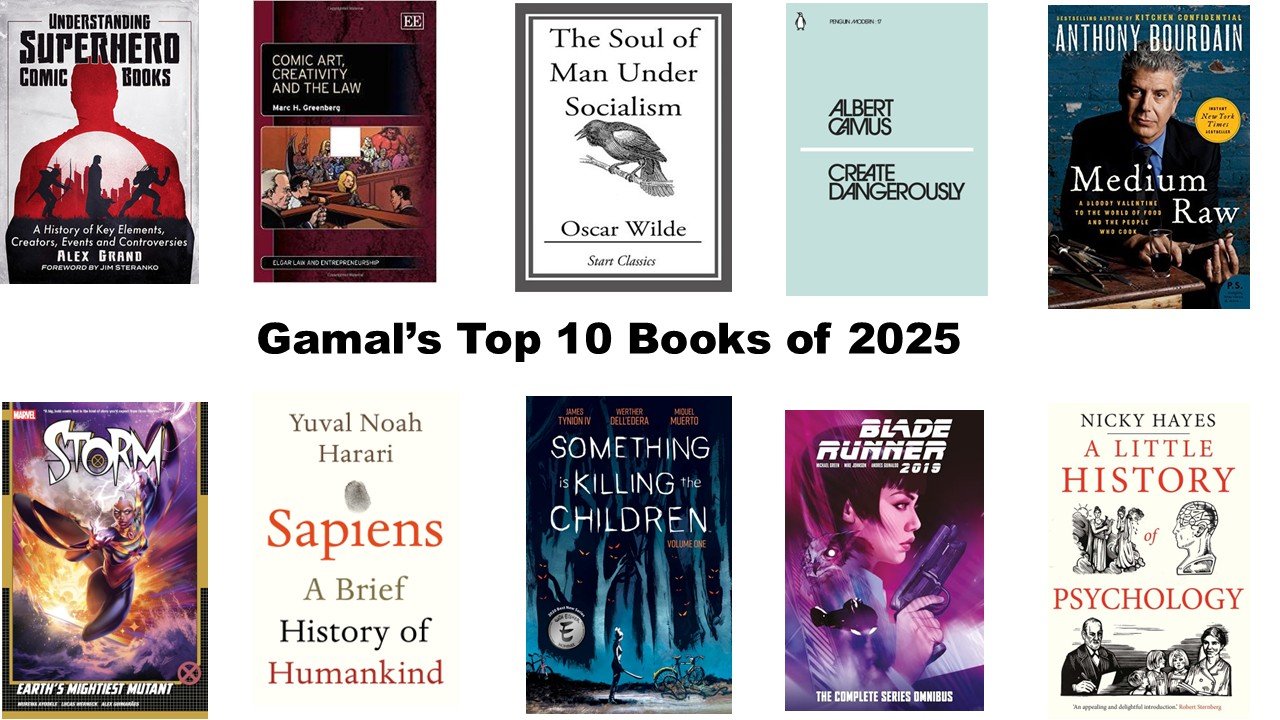
I read ninety books this year in a variety of formats, genres, and from different time periods.
These are the ten best in order of preference.
What was your favorite book of the year?
10. Understanding Superhero Comics by Alex Grand (2023 print)
9. Comic Art, Creativity, and the Law by Marc Greenberg (2014 print)
8. The Soul of Man Under Socialism by Oscar Wilde (2004 audio)
7. Create Dangerously by Albert Camus (2018 print)
6. Medium Raw by Anthony Bourdain (2010 audio)
5. Storm Vol. 1 by Murewa Ayodele and Lucas Wereck (2024 digital)
4. Sapiens by Yuval Noah Harari (2014 audio)
3. Something is Killing the Children Vol. 1 by James Tynion IV and Werther Dell’Edera (2020 print)
2. Blade Runner 2019 Omnibus by Michael Green and Mike Johnson (2025 print)
1. A Little History of Psychology by Nicky Hayes (2024 audio)
Have fun with your comic and enjoy 2026.
Gamal
If you would like to protect the legal rights to your comic or your professional comic book career, my firm is currently accepting both short-term and long-term clients. Please contact me to schedule a free consultation.
PLEASE NOTE: THIS BLOG POST IS NOT A SUBSTITUTE FOR LEGAL ADVICE. IF YOU HAVE A CONTENT, LICENSING, OR INTELLECTUAL PROPERTY ISSUE, DISCUSS IT WITH YOUR LEGAL ADVISOR OR CONTACT C3 FOR A FREE CONSULTATION.